Unlocking the Global Rise of Vegetarians: A Deep Dive into India’s Thriving Vegan Culture
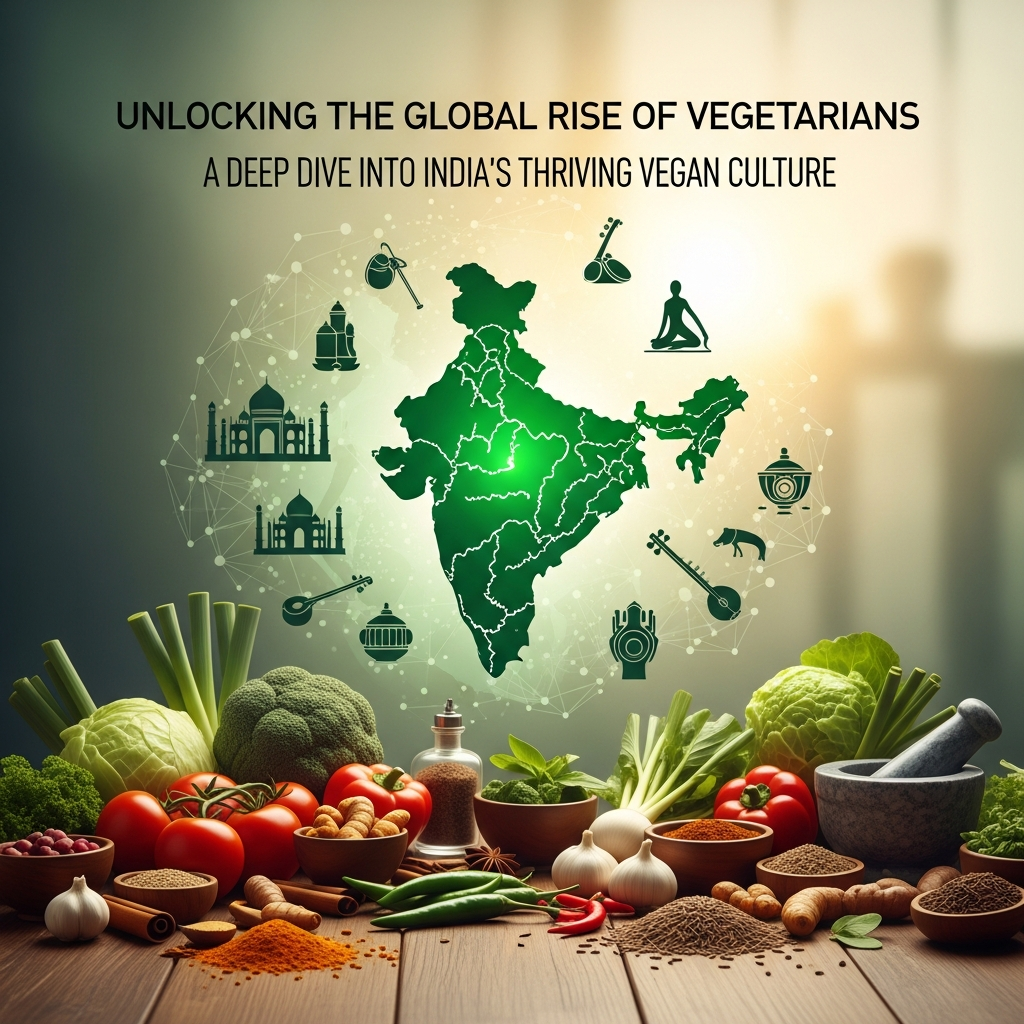
India is quietly leading a global dietary revolution. While plant-based eating has been gaining traction worldwide, nowhere is the movement more deeply rooted, diverse, and rapidly expanding than in the subcontinent. Driven by tradition, turbocharged by innovation, and embraced by millions, India’s thriving vegan culture offers a window into the future of food.
India: The Global Epicenter of Plant-Based Diets
Recent global surveys have placed India firmly at the forefront of meat-free living. According to a Statista survey highlighted by Vegconomist, nearly 40% of India’s population follows vegetarian or vegan diets. This translates to approximately 38% of Indians identifying as vegetarians—by far the world’s largest such population.
For comparison, countries like South Africa (11%), China (9%), France (8%), and even the UK and US (around 10% each) lag significantly behind in plant-based diet adoption. In other words, India’s embrace of vegetarianism is not just significant—it’s exceptional on a global scale.
#### Table: Global Adoption of Meat-Free Diets
| Country | % Vegetarian/Vegan Population |
|---|---|
| India | 38–40% |
| South Africa | 11% |
| China | 9% |
| France | 8% |
| UK | ~10% |
| US | ~10% |
| Brazil | 5% |
| Mexico | 5% |
Source: [Vegconomist Statista Survey](https://vegconomist.com/studies-numbers/india-leads-world-meat-free-diets-statista-survey-reveals/)
Cultural Roots and Modern Momentum
India’s deep affinity for vegetarianism is rooted in centuries-old religious and cultural traditions. Communities such as Jains, Lingayats, Brahmins, and Vaishnavas have long championed plant-based diets, driven by principles of non-violence and ethical living. This heritage has created an environment where meat consumption remains among the lowest in the world.
But tradition is only part of the story. The last decade has seen plant-based eating evolve from a cultural mainstay to a dynamic, innovation-driven sector. The Indian vegan food market was valued at around €1.47 billion in 2023 and is projected to grow at a staggering CAGR of 10.04%—expected to reach nearly €3.47 billion by 2032.
The New Mainstream: Veganism in Modern India
What was once seen as a niche or religious practice is now moving into the mainstream. In January 2026 alone, over 320,000 Indians participated in Veganuary, adopting vegan diets for the month and signaling a dramatic shift in public consciousness.
This wave of enthusiasm isn’t just limited to individuals. Major hotel chains like Hilton have rolled out vegan menus nationwide, while popular café chains such as Chaayos now offer oat milk as a dairy-free chai option. Over 150 brands, restaurants, and retailers—including Natures Basket and Super You—launched Veganuary-specific products and promotions, making vegan foods more accessible than ever before.
Workplaces are embracing the change too. Organizations ranging from Rotary Club to Cambridge University Press now incorporate plant-based diets into wellness initiatives, further normalizing vegan choices among urban professionals.
Why Indians Are Going Plant-Based: Motivations and Benefits
Several factors are converging to drive this transformation:
#### Health and Wellness
Rising health consciousness—spurred by concerns about chronic diseases and lifestyle disorders—has led many Indians to reduce animal products and embrace nutrient-rich plant-based foods.
#### Environmental Sustainability
Plant-based diets are increasingly recognized for their lower environmental impact, requiring less land and water while producing fewer greenhouse gas emissions compared to traditional animal farming.
#### Ethical Considerations
Awareness about animal welfare is growing, with consumers questioning the ethics of dairy farming and livestock exploitation. As India accounts for about 25% of global milk production, ethical concerns are prompting many to seek cruelty-free alternatives.
Innovation at the Core: Market Trends and Technologies
The rapid expansion of India’s vegan culture is being fueled by remarkable innovation across food technology and product development:
#### Table: Key Segments in India's Plant-Based Food Industry
| Segment | Major Products | Growth Drivers |
|---|---|---|
| Meat Substitutes | Burgers, sausages, kebabs (soy/jackfruit/pea) | Health, ethics |
| Dairy Alternatives | Milk (soy/almond/coconut), yogurt, cheese | Lactose intolerance |
| Snacks & Beverages | Protein snacks, fortified drinks | Urban consumer demand |
Government Support and Economic Opportunity
India’s government has recognized the sector’s potential—both for domestic wellness and as an export powerhouse. Initiatives like the Pradhan Mantri Kisan Sampada Yojana (PMKSY), PM Formalisation of Micro Food Processing Enterprises (PMFME), and the Production Linked Incentive Scheme (PLISFPI) provide funding and infrastructure for modern food processing.
With abundant raw materials (legumes, cereals, fruits), low production costs, and a culinary tradition suited to vegan adaptation, Indian companies are poised to capture a growing share of the global market. The country’s urbanization—expected to reach 600 million city dwellers by 2030—will only accelerate demand for convenient, health-focused plant-based foods.
The Road Ahead: From Trend to Transformation
India’s plant-based movement has transcended its roots to become an engine of innovation and inclusivity. As veganism goes mainstream—from corporate boardrooms to street-side chai stalls—the country is redefining what it means to eat sustainably and ethically in the 21st century.
The surge in participation during events like Veganuary underscores that this is not a passing fad but a permanent shift in food culture. Supported by government policy, technological advances, and evolving consumer attitudes, India’s thriving vegan culture stands as both a beacon and blueprint for the rest of the world.
As global protein consumption evolves—and as environmental and ethical concerns come ever more to the fore—the world is watching India not just as a land of tradition but as the vanguard of tomorrow’s sustainable food revolution.