In the vast and diverse landscape of Indian food, vegetarianism is a prominent and celebrated practice. Yet, within this world lies a culinary tradition that takes the principles of plant-based eating to a profound level of mindfulness and compassion: Jain vegetarian cuisine. Far more than just a diet, Jain food is a spiritual practice rooted in the ancient philosophy of Ahimsa, or non-violence, towards all living beings. This intricate and flavorful cuisine demonstrates that limitations can foster incredible creativity, resulting in a delightful feast that is as nourishing for the soul as it is for the body.
The Philosophical Roots: Ahimsa on a Plate
The foundation of Jain cuisine is the unwavering principle of Ahimsa, which dictates that one must avoid causing harm to any living creature. This philosophy extends beyond animals and birds to include insects and even microscopic organisms. Jains believe that all life, regardless of its size or number of senses, is sacred. This core belief directly shapes every aspect of their diet, from the ingredients chosen to the methods of preparation and even the time of day meals are consumed.
This commitment to non-violence leads to a classification of life forms based on their number of senses. Plants are considered one-sensed beings, but even within this category, there are distinctions. The most significant rule in Jain cooking is the strict avoidance of all root vegetables. This includes potatoes, onions, garlic, carrots, beets, ginger, and turmeric. The reasoning is twofold: uprooting the plant kills it entirely, preventing it from ever growing again, and the process of harvesting these roots inevitably harms countless microorganisms living in the soil. Therefore, Jain cuisine focuses exclusively on foods that can be harvested without destroying the parent plant.
What's On the Plate (and What's Not)
At first glance, the list of exclusions might seem restrictive, but Jain cuisine is a testament to abundance and ingenuity. The diet is rich in what are considered sattvic (pure and harmonious) foods that promote clarity and peace. The staples of a Jain kitchen include a wide variety of grains like wheat, rice, and millet; an array of legumes such as lentils, chickpeas, and beans; and seasonal vegetables and fruits that grow above the ground. Gourds, peppers, peas, cauliflower, tomatoes, and leafy greens are all welcome. Dairy products are generally permissible, but honey is strictly forbidden as its collection involves violence towards bees.
The list of forbidden foods is precise and based on the principles of Ahimsa. In addition to all meat, poultry, fish, and eggs, the exclusion of root vegetables like onions and garlic is a defining feature. Certain fruits with a high number of seeds or those that might harbor insects, like figs and some berries, are also avoided. Furthermore, Jains traditionally avoid consuming food that has been left overnight, as it is believed to accumulate a higher concentration of microorganisms. This practice emphasizes freshness and purity, ensuring that every meal is prepared and consumed with the utmost care.
The Ingenuity of Jain Cooking Techniques
The absence of foundational ingredients like onion and garlic, which form the base of many global cuisines, has given rise to remarkable culinary creativity. Jain chefs have mastered the art of building complex flavors using a unique palette of spices and alternative ingredients. To replicate the pungent, savory depth of onions and garlic, cooks often rely on asafoetida (hing), a powerful spice that provides a similar aromatic quality when bloomed in hot oil or ghee.
Flavor profiles are further enhanced with a masterful blend of other spices like cumin, coriander, fenugreek, and mustard seeds. Green chilies and dried red chilies provide heat, while raw, unripe bananas often stand in for potatoes, offering a similar starchy texture in curries and vegetable dishes. Gram flour (besan) is another hero ingredient, used to create everything from savory pancakes (pudla) and steamed cakes (dhokla) to the rich, creamy gravies for dishes like Gatte ki Sabzi. This resourcefulness transforms potential limitations into a unique and sophisticated culinary style.
A Taste of Jain Delicacies: Popular Dishes to Try
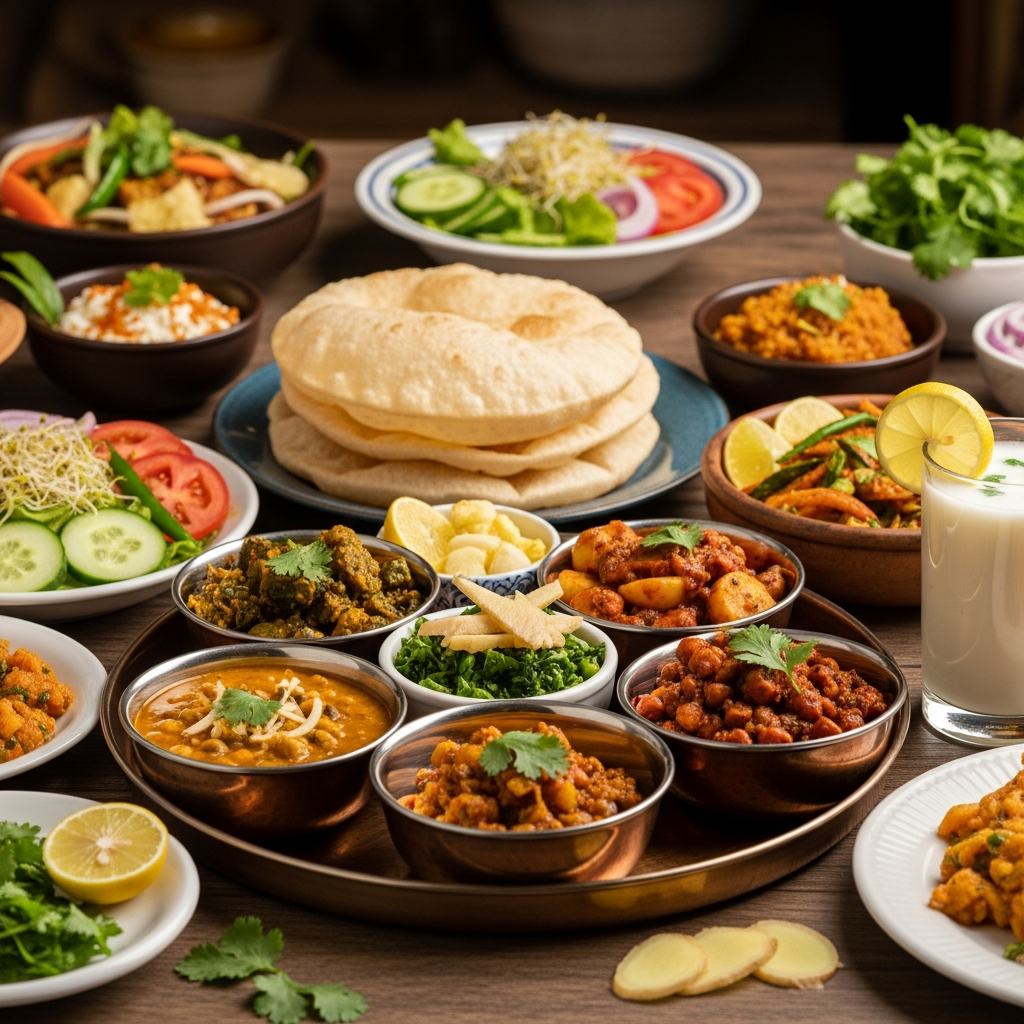
Exploring Jain cuisine is a journey of discovering familiar dishes reimagined with mindful creativity. Many popular Indian recipes have a specific Jain-friendly version that is equally, if not more, delicious. One of the most beloved dishes is Jain Pav Bhaji, where the traditional potato base is replaced with mashed plantains, peas, and cauliflower, all cooked in a fragrant tomato and spice gravy. The result is a lighter yet deeply satisfying version of the street food classic.
Another staple is Dal Baati Churma, a Rajasthani specialty that is often naturally Jain. It consists of baked wheat balls (baati) served with a simple, flavorful lentil stew (dal) and a sweet, crumbled wheat dessert (churma). Khaman Dhokla, a spongy, steamed cake made from fermented gram flour batter, is a perfect snack that embodies the lightness and flavor of the cuisine. For a hearty main course, Gatte ki Sabzi features tender gram flour dumplings simmered in a tangy yogurt-based curry, showcasing how protein-rich and fulfilling a meal can be without meat or root vegetables.
Beyond the Kitchen: Fasting and Mindful Eating
Jain culinary practices are deeply intertwined with spiritual rituals, particularly fasting. Jains observe numerous fasts throughout the year, most notably during the holy period of Paryushan. These fasts range from giving up certain foods to complete abstinence from all food and water. This discipline is seen as a way to purify the body and soul, practice self-control, and minimize one’s karmic footprint.
Another significant practice is Chauvihar, the ritual of finishing one's evening meal before sunset and not eating or drinking again until sunrise the next day. This is done to avoid accidentally harming nocturnal insects that might be attracted to food or light after dark. This practice reinforces the constant awareness and mindfulness that defines the Jain way of life, turning every meal into a conscious act of compassion and respect for the intricate web of life.
Conclusion
Jain vegetarian cuisine is far more than a collection of recipes; it is a profound expression of a philosophy centered on non-violence, mindfulness, and respect for all living beings. It challenges the conventional notions of flavor and cooking by demonstrating that creativity can flourish within a framework of ethical principles. For any veggie lover, exploring Jain food is an opportunity to discover a world of unique tastes, textures, and aromas. It is a cuisine that not only delights the palate but also offers a powerful lesson in how our food choices can reflect our deepest values, proving that a meal can be a delicious, healthful, and truly compassionate act.